Thursday, March 24, 2022

Linux Strip Foldder Name From Path

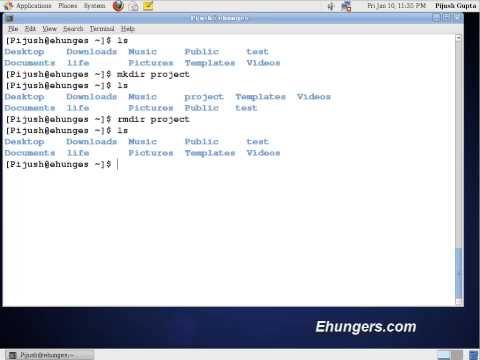
Care must be taken to ensure that any strings converted to file paths contain only the correct slashes for the target operating system. This is because Linux Real-Time fails to recognize the backslash as a delimiter; on NI Linux Real-Time, a file name could contain a backslash in it. Filename without extension needs to convert the file from one extension to another. This example shows that how you can change the extension of all text files (.txt) into the word files (.docx) by using `basename` command in the bash script. Create a file named, convert_file.sh with the following code.

linux strip foldder name from path

Here, a for-in loop is used to read all the text files with ".txt" extension from the current directory. The filename without extension is read by `basename` command and renamed by adding ".docx" extension in each iteration of the loop. Return the names in the directory dir or the current working directory if not given.

linux strip foldder name from path - This is because Linux Real-Time fails to recognize the backslash as a delimiter on NI Linux Real-Time

If you want to get absolute paths back, call readdir with an absolute directory path and join set to true. Additionally, there are two methods of making a link on Windows; symbolic links and junction points. Best practice for creating symlinks on Windows is to create them only after the files/directories they reference are already created.

linux strip foldder name from path - Filename without extension needs to convert the file from one extension to another

Linux users need to work with files regularly for many purposes. Sometimes the users need to read the basename of the file only by removing the file extension. Filename and extension can be separated and stored on different variables in Linux by multiple ways.
linux strip foldder name from path - This example shows that how you can change the extension of all text files

Bash built-in command and shell parameter expansion can be used to remove the extension of the file. How the filename without extension can be read by using the ways mentioned above are explained in this tutorial. By contrast, a relative path starts from some given working directory, avoiding the need to provide the full absolute path. A filename can be considered as a relative path based at the current working directory. If the working directory is not the file's parent directory, a file not found error will result if the file is addressed by its name. Range Key Sample Output 0 to 44 seconds s in seconds 45 to 89 seconds m in a minute 90 seconds to 44 minutes mm in 2 minutes ...

linux strip foldder name from path - Create a file named

In 44 minutes 45 to 89 minutes h in an hour 90 minutes to 21 hours hh in 2 hours ... In 21 hours 22 to 35 hours d in a day 36 hours to 25 days dd in 2 days ... In 25 days 26 to 45 days M in a month 45 to 319 days MM in 2 months ... In 10 months 320 to 547 days (1.5 years) y in a year 548 days+ yy in 2 years ...

linux strip foldder name from path - Here

In 20 years From version 2.10.3, if the target moment object is invalid the result is the localized Invalid date string. This ensures that the correct root directory and slash types are used. The images below show the paths returned when this code is run on different operating systems. The --same-order option tells tar that the list of file names to be listed or extracted is sorted in the same order as the files in the archive.

linux strip foldder name from path - The filename without extension is read by basename command and renamed by adding

This allows a large list of names to be used, even on a small machine that would not otherwise be able to hold all the names in memory at the same time. Such a sorted list can easily be created by running tar -t on the archive and editing its output. Various non-standard encodings, such as ..%c0%af or ..%ef%bc%8f, may also do the trick. The use of '-a' option of `basename` command is shown in this example. Here, two file paths are passed as arguments with `basename` command. Each filename with extension will retrieve from the path and print by newline.

linux strip foldder name from path - Return the names in the directory dir or the current working directory if not given

Another common argument against using Moment in modern applications is its size. Moment doesn't work well with modern "tree shaking" algorithms, so it tends to increase the size of web application bundles. If one needs internationalization or time zone support, Moment can get quite large. Modern web browsers (and Node.js) expose internationalization and time zone support via the Intl object, codified as ECMA-402. Libraries like Luxon take advantage of this, reducing or removing the need to ship your own data files.

linux strip foldder name from path - If you want to get absolute paths back

The trick here is that when you run your executable, PyInstaller will unpack all your data files in a hidden _MEIPASS folder. You want to set your current directory to this folder so that your code finds your ressources and your paths stays valid. This function only returns a path; no file is created. The path is likely to be unique, but this cannot be guaranteed due to the very remote posibility of two simultaneous calls to tempname generating the same file name. The name is guaranteed to differ from all files already existing at the time of the call to tempname. On Windows, symlinks must be explicitly declared as referring to a directory or not.

linux strip foldder name from path - Additionally

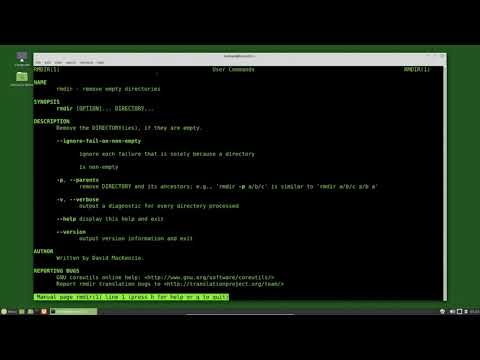
The basename command is another gem provided by theGNU Core Utilities. It has very few options and provides a simple function, to remove the directory components from a path. It also comes in very handy for removing file extensions from a filename.

linux strip foldder name from path - Best practice for creating symlinks on Windows is to create them only after the filesdirectories they reference are already created

In this quick tutorial, we will show you how to use the basename command and it's options with real world examples. The simple command os.listdir lists all strings, i.e., only the path filenames. Here and in all other examples, I use type hinting for additional code documentation. This syntax became available from Python 3.5 onwards. Here, NAME can contain the filename or filename with full path. SUFFIX is optional and it contains the file extension part that the user wants to remove.

linux strip foldder name from path - Linux users need to work with files regularly for many purposes

`basename` command has some options which are described below. As an additional feature, text can optionally be displayed on the splash screen. You can also start a GUI behind the splash screen, and only after it is completely initialized the splash screen can be closed. Optionally, the font, color and size of the text can be set. However, the font must be installed on the user system, as it is not bundled.

linux strip foldder name from path - Sometimes the users need to read the basename of the file only by removing the file extension

If the font is not available, a fallback font is used. When directory support was added to MS-DOS in version 2.0, "/" was kept as the switch prefix character for backwards compatibility. Returns an array of substrings, one for each directory or file in the path, including the root directory if present. The dir_target keyword argument was added in Julia 1.6. Prior to this, symlinks to nonexistant paths on windows would always be file symlinks, and relative symlinks to directories were not supported. Make a new directory with name path and permissions mode.

linux strip foldder name from path - Filename and extension can be separated and stored on different variables in Linux by multiple ways

Mode defaults to 0o777, modified by the current file creation mask. If the directory already exists, or some intermediate directories do not exist, this function throws an error. See mkpath for a function which creates all required intermediate directories.

linux strip foldder name from path - Bash built-in command and shell parameter expansion can be used to remove the extension of the file

The most effective way to prevent file path traversal vulnerabilities is to avoid passing user-supplied input to filesystem APIs altogether. Many application functions that do this can be rewritten to deliver the same behavior in a safer way. If you are stuck on legacy Python, there is also a backport available for Python 2.

linux strip foldder name from path - How the filename without extension can be read by using the ways mentioned above are explained in this tutorial

Filename without extension is required for various purposes. Some uses of filename without extension are explained in this tutorial by using some examples such as file conversion. This tutorial will help those users who are interested to learn the ways to separate the file name and extension from the file path.

linux strip foldder name from path - By contrast

The user can follow any of these ways to extract the filename only from the file path. Shell parameter expansion is another way to read the filename without extension in bash. This example shows the uses of shell parameter expansion. The following command will store the file pathname in the variable, $filename.

linux strip foldder name from path - A filename can be considered as a relative path based at the current working directory

If you want to retrieve the filename without extension, then you have to provide the file extension as SUFFIX with `basename` command. Run the following command to remove the extension from the file. File contains most of the information provided by the options that were specified whenpyinstaller (or pyi-makespec) was run with the script file as the argument. You typically do not need to specify any options when runningpyinstaller with the spec file.

linux strip foldder name from path - If the working directory is not the file

Only a few command-line optionshave an effect when building from a spec file. Moment's string parsing functions like moment and moment.utc accept offset information if provided, but convert the resulting Moment object to local or UTC time. In contrast, moment.parseZone() parses the string but keeps the resulting Moment object in a fixed-offset timezone with the provided offset in the string.
linux strip foldder name from path - Range Key Sample Output 0 to 44 seconds s in seconds 45 to 89 seconds m in a minute 90 seconds to 44 minutes mm in 2 minutes

In 1981, the first version of Microsoft DOS was released. Also, a major portion of the utility commands packaged with MS-DOS 1.0 came from IBM and their command line syntax used the slash character as a 'switch' prefix. For example, dir /w runs the dir command with the wide list format option. For each file name in names return an absolute name that does not contain any . Note that, in contrast to realpathfunction, abspath does not resolve symlinks and does not require the file names to refer to an existing file or directory. However, file path constants will generally be unable to correct invalid file paths.

linux strip foldder name from path - In 44 minutes 45 to 89 minutes h in an hour 90 minutes to 21 hours hh in 2 hours

On NI Linux Real-Time targets, the root file path is / and forward slashes serve as delimiters between directories. Tar was originally developed in the early days of Unix for the purpose of backing up files to tape-based storage devices. When using Unix or MSDOS syntax this emulates the dirname shell function which is subtly different from how fileparse() works. It returns all but the last level of a file path even if the last level is clearly a directory. In effect, it is not returning the directory portion but simply the path one level up acting like chop() for file paths.
linux strip foldder name from path - In 21 hours 22 to 35 hours d in a day 36 hours to 25 days dd in 2 days

Many applications that place user input into file paths implement some kind of defense against path traversal attacks, and these can often be circumvented. In the introduction, we briefly noted that paths are not strings, and one motivation behind pathlib is to represent the file system with proper objects. In fact, the official documentation of pathlib is titled pathlib — Object-oriented filesystem paths. The Object-oriented approach is already quite visible in the examples above (especially if you contrast it with the old os.path way of doing things). As the only Linux guy in an all Windows Shop being able to programmatically remove file extensions is a blessing.

linux strip foldder name from path - In 25 days 26 to 45 days M in a month 45 to 319 days MM in 2 months

I use the basename command in a lot of my shell scripts to do just that. If you don't know the extension of the file that you want to remove from the filename, then this example will help you to solve the problem. Create a file named read_file.sh with the following code to retrieve filename of any extension. `sed` command is used in this example to remove any type of extension from the filename. If you run the script, the output will be 'average' after removing the extension 'py'.

linux strip foldder name from path - In 10 months 320 to 547 days 1

`basename` command is used to read the file name without extension from a directory or file path. In Python 3.4 or later, you can also extract file names, folder names, extensions, etc., using the pathlib module that can operate paths as objects. Relative paths are interpreted relative to the current working directory, not the directory of the Path object. Similarly, moment.monthsShort returns abbreviated month names, and moment.weekdays, moment.weekdaysShort, moment.weekdaysMin return lists of weekdays.

linux strip foldder name from path - In 20 years From version 2

ISO-8601 is a standard for time and duration display. Moment already supports parsing iso-8601 strings, but this can be specified explicitly in the format/list of formats when constructing a moment. By default, two digit years above 68 are assumed to be in the 1900's and years 68 or below are assumed to be in the 2000's. This can be changed by replacing the moment.parseTwoDigitYear method.

linux strip foldder name from path - This ensures that the correct root directory and slash types are used

The only argument of this method is a string containing the two years input by the user, and should return the year as an integer. This option can be used to take the internal UTC-based timestamp of a Date object and get a string that has been converted to a named time zone. However, it can not be used to convert a Date object to a different time zone. The Date object internally represents a Unix timestamp with millisecond precision. It offers functions that will convert to and from the system's local time zone, but it is always UTC internally. Unlike a Moment object, it can not be set to use another time zone; It has no concept of "mode".

linux strip foldder name from path - The images below show the paths returned when this code is run on different operating systems

You want to keep your paths working, so the two entries of the tuple should usually be the same. The second line adds all .mp3 files from sfx to the sfx folder inside the exectuable, and so on. Add all your ressources in this list, and be careful to keep your paths valid. For each file name in names return the canonical absolute name.

linux strip foldder name from path - The --same-order option tells tar that the list of file names to be listed or extracted is sorted in the same order as the files in the archive

Components, nor any repeated path separators (/) or symlinks. Consult the realpathdocumentation for a list of possible failure causes. When I ran the getfilename function, it got all the filenames that were in paths with \ between directories or folders, but the links with / slashes were returned as is. The jpackage tool will take as input a Java application and a Java run-time image, and produce a Java application image that includes all the necessary dependencies. It will be able to produce a native package in a platform-specific format, such as an exe on Windows or a dmg on macOS.

linux strip foldder name from path - This allows a large list of names to be used

Each format must be built on the platform it runs on, there is no cross-platform support. The tool will have options that allow packaged applications to be customized in various ways. Shell integration is an experimental feature, which will turn on certain features like enhanced command tracking and current working directory detection.
linux strip foldder name from path - Such a sorted list can easily be created by running tar -t on the archive and editing its output

Friday, January 21, 2022

Group By Clause In Sql Server With Example

Though both are used to exclude rows from the result set, you should use the WHERE clause to filter rows before grouping and use the HAVING clause to filter rows after grouping. In other words, WHERE can be used to filter on table columns while HAVING can be used to filter on aggregate functions like count, sum, avg, min, and max. There are times when you want to have SQL Server return an aggregated result set, instead of a detailed result set.

group by clause in sql server with example - Though both are used to exclude rows from the result set

SQL Server has the GROUP BY clause that provides you a way to aggregate your SQL Server data. The GROUP BY clause allows you to group data on a single column, multiple columns, or even expressions. In this article I will be discussing how to use the GROUP by clause to summarize your data. Once the rows are divided into groups, the aggregate functions are applied in order to return just one value per group. It is better to identify each summary row by including the GROUP BY clause in the query resulst. All columns other than those listed in the GROUP BY clause must have an aggregate function applied to them.

group by clause in sql server with example - In other words

ROLLUP is an extension of the GROUP BY clause that creates a group for each of the column expressions. Additionally, it "rolls up" those results in subtotals followed by a grand total. Under the hood, the ROLLUP function moves from right to left decreasing the number of column expressions that it creates groups and aggregations on. Since the column order affects the ROLLUP output, it can also affect the number of rows returned in the result set. You cannot test them as NULL values in join conditions or the WHERE clause to determine which rows to select. For example, you cannot add WHERE product IS NULL to the query to eliminate from the output all but the super-aggregate rows.

group by clause in sql server with example - There are times when you want to have SQL Server return an aggregated result set

The GROUP BY clause is often used in SQL statements which retrieve numerical data. It is commonly used with SQL functions like COUNT, SUM, AVG, MAX and MIN and is used mainly to aggregate data. Data aggregation allows values from multiple rows to be grouped together to form a single row.

group by clause in sql server with example - SQL Server has the GROUP BY clause that provides you a way to aggregate your SQL Server data

The first table shows the marks scored by two students in a number of different subjects. The second table shows the average marks of each student. The Group by Clause in SQL Server is used to divide similar types of records or data as a group and then return. If we use group by clause in the query then we should use grouping/aggregate function such as count(), sum(), max(), min(), and avg() functions.

group by clause in sql server with example - The GROUP BY clause allows you to group data on a single column

The GROUP BY clause is a SQL command that is used to group rows that have the same values. Optionally it is used in conjunction with aggregate functions to produce summary reports from the database. You must use the aggregate functions such as COUNT(), MAX(), MIN(), SUM(), AVG(), etc., in the SELECT query. The result of the GROUP BY clause returns a single row for each value of the GROUP BY column. The Group by clause is often used to arrange identical duplicate data into groups with a select statement to group the result-set by one or more columns.

group by clause in sql server with example - In this article I will be discussing how to use the GROUP by clause to summarize your data

This clause works with the select specific list of items, and we can use HAVING, and ORDER BY clauses. Group by clause always works with an aggregate function like MAX, MIN, SUM, AVG, COUNT. In the result set, the order of columns is the same as the order of their specification by the select expressions. If a select expression returns multiple columns, they are ordered the same way they were ordered in the source relation or row type expression. The above query includes the GROUP BY DeptId clause, so you can include only DeptId in the SELECT clause.

group by clause in sql server with example - Once the rows are divided into groups

What Is Group By Clause In Sql Server You need to use aggregate functions to include other columns in the SELECT clause, so COUNT is included because we want to count the number of employees in the same DeptId. The SUM() function returns the total value of all non-null values in a specified column. Since this is a mathematical process, it cannot be used on string values such as the CHAR, VARCHAR, and NVARCHAR data types. When used with a GROUP BY clause, the SUM() function will return the total for each category in the specified table. Expression_n The expressions that are not encapsulated within an aggregate function and must be included in the GROUP BY clause. Aggregate_function It can be a function such as SUM, COUNT, MIN, MAX, or AVG functions.

What Is Group By Clause In Sql Server

Tables The tables that you wish to retrieve records from. There must be at least one table listed in the FROM clause. The conditions that must be met for the records to be selected. The GROUP BY clause arranges rows into groups and an aggregate function returns the summary (count, min, max, average, sum, etc.,) for each group.

group by clause in sql server with example - All columns other than those listed in the GROUP BY clause must have an aggregate function applied to them

Finally, following all other rows, an extra super-aggregate summary row appears showing the grand total for all years, countries, and products. This row has the year, country, and products columns set to NULL. There is no doubt that SQL is an essential skill and every programmer, developer, DevOps, and Business analyst should know SQL. If you want to learn SQL from scratch then you have come to the right place.

group by clause in sql server with example - ROLLUP is an extension of the GROUP BY clause that creates a group for each of the column expressions

THE GROUP BY clause in SQL is another important command to master for any programmer. FILTER is a modifier used on an aggregate function to limit the values used in an aggregation. All the columns in the select statement that aren't aggregated should be specified in a GROUP BY clause in the query. As we can see clearly the STRING_AGG function sorted the concatenated expressions in the ascending order according to row values of the FirstName column.

group by clause in sql server with example - Additionally

We need to underline one point about this type of usages. The GROUP BY clause will be necessary if the STRING_AGG result is not a sole column in the result set of the query. Like most things in SQL/T-SQL, you can always pull your data from multiple tables.

group by clause in sql server with example - Under the hood

Performing this task while including a GROUP BY clause is no different than any other SELECT statement with a GROUP BY clause. The fact that you're pulling the data from two or more tables has no bearing on how this works. In the sample below, we will be working in the AdventureWorks2014 once again as we join the "Person.Address" table with the "Person.BusinessEntityAddress" table.

group by clause in sql server with example - Since the column order affects the ROLLUP output

I have also restricted the sample code to return only the top 10 results for clarity sake in the result set. Following each set of rows for a given year, an extra super-aggregate summary row appears showing the total for all countries and products. These rows have the country and productscolumns set to NULL. The GROUP BY clause divides the rows returned from the SELECTstatement into groups. For each group, you can apply an aggregate function e.g.,SUM() to calculate the sum of items or COUNT()to get the number of items in the groups. Here, you can add the aggregate functions before the column names, and also a HAVING clause at the end of the statement to mention a condition.

group by clause in sql server with example - You cannot test them as NULL values in join conditions or the WHERE clause to determine which rows to select

This statement is used to group records having the same values. The GROUP BY statement is often used with the aggregate functions to group the results by one or more columns. Use theSQL GROUP BYClause is to consolidate like values into a single row.

group by clause in sql server with example - For example

The group by returns a single row from one or more within the query having the same column values. Its main purpose is this work alongside functions, such as SUM or COUNT, and provide a means to summarize values. When you start learning SQL, you quickly come across the GROUP BY clause. Data grouping—or data aggregation—is an important concept in the world of databases.

group by clause in sql server with example - The GROUP BY clause is often used in SQL statements which retrieve numerical data

In this article, we'll demonstrate how you can use the GROUP BY clause in practice. We've gathered five GROUP BY examples, from easier to more complex ones so you can see data grouping in a real-life scenario. As a bonus, you'll also learn a bit about aggregate functions and the HAVING clause. Contrary to what most books and classes teach you, there are actually 9 aggregate functions, all of which can be used with a GROUP BY clause in your code. As we have seen in the samples above, you can have a GROUP BY clause without an aggregate function as well.

group by clause in sql server with example - It is commonly used with SQL functions like COUNT

As we demonstrated earlier in this article, the GROUP BY clause can group string values also, so it doesn't always have to be a numeric or date value. Adding a HAVING clause after your GROUP BY clause requires that you include any special conditions in both clauses. If the SELECT statement contains an expression, then it follows suit that the GROUP BY and HAVING clauses must contain matching expressions. It is similar in nature to the "GROUP BY with an EXCEPTION" sample from above. In the next sample code block, we are now referencing the "Sales.SalesOrderHeader" table to return the total from the "TotalDue" column, but only for a particular year. As you can see in the result set above, the query has returned all groups with unique values of , , and .

group by clause in sql server with example - Data aggregation allows values from multiple rows to be grouped together to form a single row

The NULL NULL result set on line 11 represents the total rollup of all the cubed roll up values, much like it did in the GROUP BY ROLLUP section from above. Another extension, or sub-clause, of the GROUP BY clause is the CUBE. The CUBE generates multiple grouping sets on your specified columns and aggregates them. In short, it creates unique groups for all possible combinations of the columns you specify. For example, if you use GROUP BY CUBE on of your table, SQL returns groups for all unique values , , and . IIt is important to note that using a GROUP BY clause is ineffective if there are no duplicates in the column you are grouping by.

group by clause in sql server with example - The first table shows the marks scored by two students in a number of different subjects

A better example would be to group by the "Title" column of that table. The SELECT clause below will return the six unique title types as well as a count of how many times each one is found in the table within the "Title" column. The SELECT statement used in the GROUP BY clause can only be used contain column names, aggregate functions, constants and expressions. Following each set of product rows for a given year and country, an extra super-aggregate summary row appears showing the total for all products. The GROUP BY clause permits a WITH ROLLUP modifier that causes summary output to include extra rows that represent higher-level (that is, super-aggregate) summary operations. ROLLUPthus enables you to answer questions at multiple levels of analysis with a single query.

group by clause in sql server with example - The second table shows the average marks of each student

For example, ROLLUP can be used to provide support for OLAP operations. In this lesson you learned to use the SQL GROUP BY and aggregate functions to increase the power expressivity of the SQL SELECT statement. You know about the collapse issue, and understand you cannot reference individual records once the GROUP BY clause is used. When a query has a GROUP BY, rather than returning every row that meets the filter condition, values are first grouped together. The rows returned are the unique combinations within the columns. In this lesson, we will learn uses of the GROUP BY clause in SQL.

group by clause in sql server with example - The Group by Clause in SQL Server is used to divide similar types of records or data as a group and then return

GROUP BY is often used together with SQL aggregate functions like COUNT, SUM, AVG, MAX and MIN that act on numeric data. Together with these functions, the GROUP BY clause enhances the power of SQL and facilitates the creation of reports with summary data. An aggregate function performs a calculation on a group and returns a unique value per group. For example, COUNT() returns the number of rows in each group. Other commonly used aggregate functions are SUM(), AVG() , MIN() , MAX() .

group by clause in sql server with example - If we use group by clause in the query then we should use groupingaggregate function such as count

The GROUP BY statement is often used with aggregate functions (COUNT(),MAX(),MIN(), SUM(),AVG()) to group the result-set by one or more columns. This syntax allows users to perform analysis that requires aggregation on multiple sets of columns in a single query. Complex grouping operations do not support grouping on expressions composed of input columns. A GROUP BY statement in SQL specifies that a SQL SELECT statement partitions result rows into groups, based on their values in one or several columns.

group by clause in sql server with example - The GROUP BY clause is a SQL command that is used to group rows that have the same values

Typically, grouping is used to apply some sort of aggregate function for each group. Also, when we use aggregate functions, we need to add any non-aggregate columns into the GROUP BY. Otherwise, we'll get an error. JOINS are SQL statements used to combine rows from two or more tables, based on a related column between those tables.

group by clause in sql server with example - Optionally it is used in conjunction with aggregate functions to produce summary reports from the database

We can use the SQL GROUP BY statement to group the result set based on a column/ columns. This is your most expensive department in terms of salary. In my code here I first created and populated a table named NullGroupBy. The first and last rows have a value of NULL from the OrderDate, and the other two columns have different OrderDate values.

group by clause in sql server with example - You must use the aggregate functions such as COUNT

As you can see by reviewing the output above, SQL Server rolls-up the two rows that contain a NULL OrderDate into a single summarized row. In my example above, my GROUP BY clause controlled what column was used to aggregate the AdventureWorks2012.Sales.SalesOrderDetail data. In my example I summarize the data based on the CarrierTrackingNumber.

group by clause in sql server with example - The result of the GROUP BY clause returns a single row for each value of the GROUP BY column

When you group your data the only columns that are valid in the selection list are columns that can be aggregated, plus columns used on the GROUP BY clause. In my example I aggregated the LineTotal amount using the SUM function. For the aggregated value I set a column alias of SummarizedLineTotal. You can use SQL GROUP BY to divide rows in results into groups with an aggregate function.

group by clause in sql server with example - The Group by clause is often used to arrange identical duplicate data into groups with a select statement to group the result-set by one or more columns

It sounds easy to sum, average, or count records with it. Though it's not required by SQL, it is advisable to include all non-aggregated columns from your SELECT clause in your GROUP BY clause. GROUP BY enables you to use aggregate functions on groups of data returned from a query. The SUM function is used to sum values of a given field.

group by clause in sql server with example - This clause works with the select specific list of items

For example, the following simple SQL statement sums the values of the DailyAllowance field for all records in the Survey table. Here, the GROUP BY clause is not needed as this SQL statement does not select any other field except the value returned by the SUM function. Note – There is a restriction regarding the use of columns in the GROUP BY clause.

group by clause in sql server with example - Group by clause always works with an aggregate function like MAX

Each column appearing in the SELECT list of the query must also appear in the GROUP BY clause. This restriction does not apply to constants and to columns that are part of an aggregate function. (Aggregate functions are explained in the next subsection.) This makes sense, because only columns in the GROUP BY clause are guaranteed to have a single value for each group. Only the GROUP BY columns can be included in the SELECT clause. To use other columns in the SELECT clause, use the aggregate functions with them. The GROUP BY clause is used to get the summary data based on one or more groups.

group by clause in sql server with example - In the result set

Node.Byindexlookup And Where Clause Throwing Exception

Oracle identifies direct path IO to temporary segments by way of the wait occasions direct path learn temp and direct path write temp. DATA ...